Anaerobic Work Capacity (W') for Cyclists: Train W' for Sprint Finishes and Attacks
5 min read

Learn what W' means for cyclists, how it shapes sprint finishes and attacks, and how to train it with focused intervals, recovery, and repeatable tests.
On this page
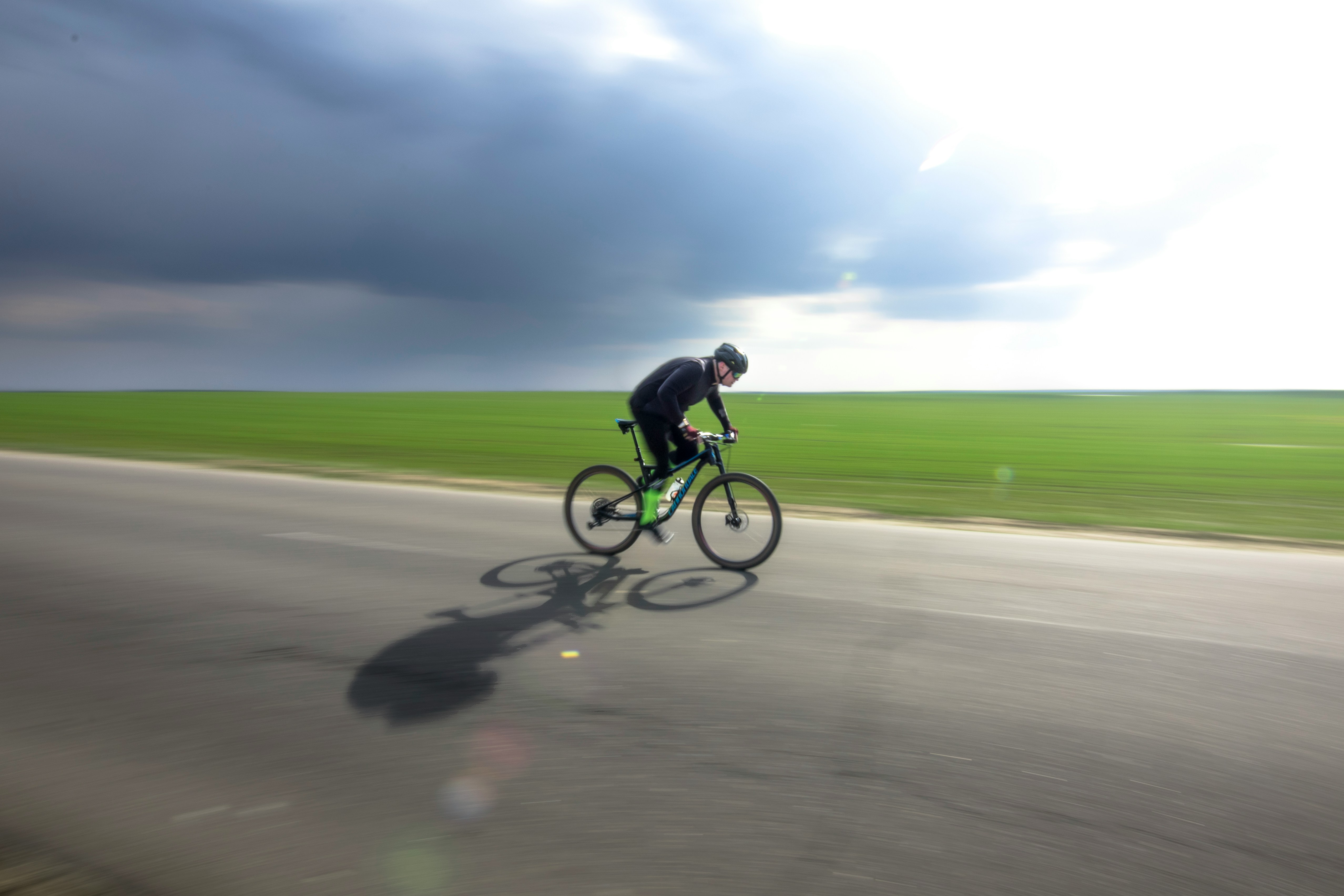
Photo by Alexander Fastovets on Unsplash.
W' is your finite anaerobic reserve for sprints and attacks. Train it with short hard efforts, controlled recovery, and repeatable tests.
This refresh keeps the original promise: define W', show why it matters in sprint finishes and attacks, and give you a practical way to train it. The evidence base is model-led and test-sensitive, so this guide treats W' as a useful field metric rather than a magic number.
W' is the finite work you can do above critical power before that effort must fade. In plain terms, it describes your short-burst reserve for jumps, hard bridges, and sprint finishes.
Critical power marks the model boundary between hard work you can hold longer and work that draws down W'. If you need the base concept first, review how FTP anchors power work before you chase sharper sprint gains.
W' is not a hidden fuel tank you can see or touch. It is a model-based way to track short, severe work, so the number shifts with test choice and fatigue.
For racing, W' explains why the same sprint can feel strong once and flat later. The training system around it must include sharp work, easy riding, and repeatable checks.
Treat W' as work above critical power, not as FTP.
Use it to frame sprints, attacks, and hard surges.
Expect it to fall during hard work and return during easier riding.
Pair W' work with sound power data when possible.
Know the size of the reserve before you plan how to spend it.
W' is your short-burst reserve: finite, useful, and only clear when you test it the same way.

Photo by Haryo Setyadi on Unsplash.
You do not need a lab to track whether W' work is moving the right way. You do need the same test, similar rest, and a clear note on conditions.
Field testing can use maximal efforts and model fitting, but the exact estimate depends on the protocol. That is why one steady method beats a new test every month.
Before testing, make your power data as clean as you can. Use precise sprint power habits, the same warm-up, and the same road or trainer when possible.
Retest after enough training time has passed to show a trend. One bad day may show poor sleep, low fuel, or life stress instead of lost capacity.
Use the same warm-up, fuel, and time of day.
Test rested, not at the end of a hard week.
Use the same road, trainer, or course when possible.
Track trends across tests, not one noisy result.
The test should show training change, not test noise.
W' (W prime) is the finite anaerobic energy store used above your critical power for efforts like sprints and hard attacks.
Data analysis is free, forever. The Dynamic Coach is Pro. Connected to Garmin, Strava, Whoop, and intervals.icu.
Training W' means giving your body specific work above critical power while protecting the quality of each rep. More hard riding is not the same as better W' training.
Use one or two focused W' sessions in a week, then let easy riding do its job. If all rides turn into attacks, peak power often falls before fitness improves.
Short sprints build the jump, while longer severe efforts train the ability to keep producing hard work. For session design, use short sprint interval variants as a practical starting point.
Aerobic work still matters because most races ask you to recover between surges. A rider who only trains the first jump may miss the second move.
Start with one focused W' session if sprint work is new.
Use two W' sessions only when recovery stays steady.
Keep one longer aerobic ride each week.
Stop a sprint set when form breaks down.
Do not stack W' work on back-to-back hard days.
Keep the sharp inputs sharp, and keep the rest of the week calm enough to absorb them.
Your next move is simple: add one focused W' session this week, not three. If you already sprint often, use two focused sessions and cut stray hard efforts.
A short-sprint day targets peak jump and clean technique. A repeated-attack day targets the work you need after the first move has already hurt.
For busy weeks, one focused sprint session can still be enough to keep the signal clear. Pair it with time-smart cycling sessions instead of squeezing hard work into every ride.
If you race crits or late-season road events, the goal is repeatability under pressure. Use crit repeatability work when your issue is fading after several surges, not your first jump.
Short-sprint session: eight short all-out jumps from a rolling start.
Repeated-attack session: six hard above-CP efforts with easy spinning between.
W' endurance session: four near-max efforts longer than a sprint.
Keep recoveries easy enough to protect the next rep.
Train the move you need, then stop before noise replaces signal.
One tactical email with training ideas and product updates. No spam — unsubscribe anytime.
Keep reading
- Power Durability for Long‑Course Cyclists: How to Hold FTP After Three Hours — The supplied PubMed search did not show a direct match, so use this cautious field guide to test late‑ride FTP and choose one provisional training st...
- Sweet Spot Training: When to Do It Today — Tight on time? Sweet spot is the hard-but-repeatable work. Use how recovered you feel (and yesterday's load) to decide SST vs rest vs something harde...
- FTP Test Cycling: How to Measure Your Functional Threshold Power Accurately — Learn how to measure cycling FTP with a calibrated power meter, repeatable warm-up, controlled setup, and a well-paced 20-minute test.
W' is only useful if you learn when to spend it. A strong jump used too early can close a gap and leave you flat for the winning move.
Race with a budget mindset. Spend small amounts when position demands it, then settle below the line before the next hard move.
Power data can help you match training gains to race choices. Use race execution with power to link your numbers to where the race is actually won.
Your power profile can also show whether this block fits your rider type. Check your rider power profile before you keep extending a sprint-focused phase.
Save full sprints for decisive gaps or the finish.
Use small surges to hold position, not to show strength.
Recover below threshold when the race allows it.
Practice attacks on safe roads, trainers, or closed circuits.
The goal is not just more W', but better timing when the race asks for it.
Track three things: your best short effort, your fade across repeats, and how fresh you feel before hard days. Together, they tell a clearer story than one peak number.
If peak power rises but repeatability falls, keep one sprint day and shift the second hard day toward repeated efforts. If both fall, your recovery inputs likely changed.
Your threshold did not disappear; your recovery inputs shifted, so the output dropped. Keep intensity, cut weekly volume for seven days, then reassess the next hard session.
When progress slows, do not add more hard work by default. Use adaptive training plan science to think in systems, not isolated workouts.
Log sleep, soreness, RPE, and sprint quality.
Cut volume for seven days if repeatability drops.
Keep one high-quality W' session during a lighter week.
Retest under the same conditions after the block.
Goal: Increase W' power and repeatability for sprint finishes and attacks while preserving your aerobic base.
Week 1: Test under controlled conditions, then complete one short-sprint session later in the week. Keep other rides easy or steady, and do not stack hard days.
Week 2: Add a repeated-attack session and one short-sprint session. Keep total volume modest so the hard work stays clean.
Week 3: Maintain intensity and reduce total ride volume compared with Week 2. Keep the W' session that produced the best power and add an easy day if readiness is low.
Week 4: Repeat the baseline test under the same conditions. If power and repeatability improve, repeat the block with a small step up; if fatigue is high, extend the reduced-volume week.
W' is the finite anaerobic reserve you spend above critical power for sprints and attacks. Train it with one or two focused hard sessions, keep the rest of the week controlled, and test the same way before you change course.
FTP and sweet spot work can support the base around W' training, but they do not fully target short above-critical-power efforts. Keep them in the plan, then add specific sprint or repeated-hard work when W' is the goal.
No. A hard group ride may include useful surges, but it is often too random for clean progress. Use one controlled W' session when you need a clear signal.
Your first jump is improving faster than your repeatability. Keep one sprint day, then make the second hard day focused on repeated attacks with enough recovery to hold form.
Use a trainer, closed course, quiet straight road, or a group setting with clear rules. The best sprint session is one you can repeat without adding needless risk.
W' (W prime) — The model-based amount of work you can do above critical power before severe effort must fade. Critical Power — The power boundary used in the model to separate more sustainable hard work from work that draws down W'. Anaerobic Work Capacity — A plain-language label for the short-term work reserve used during very hard efforts. Supra-threshold interval — A hard interval done above threshold or critical power, usually with clear recovery between reps. Repeated-sprint ability — Your ability to produce several strong sprints or attacks without a large drop in output. Recovery — The easy time and broader rest inputs that help restore your ability to produce hard work again.